
TEDMUN'26
TED Ankara College Model United Nations
Konferans Ücretleri
Ek Bilgiler
CONFERENCE BANK DETAILS
Branch: DENİZBANK - Tunalı Hilmi Şubesi
Receiver name: Türk Eğitim Derneği Ankara Koleji Vak Oku İkt İşl
IBAN Number: TR34 0013 4000 0002 7749 6002 33
Account number: 5570-277496-443
Name, surname, ID number and school name must be stated in the explanation section.
Participants outside Ankara will NOT be accepted.
Komiteler
Militarization of Advancements in Nuclear Technology and Mutual Disarmament Amidst Rising Tensions
The Disarmament and International Security Committee serves as the primary body addressing global challenges related to disarmament, arms control, and threats to international peace and security. Advancements in nuclear technology have driven progress in energy, medicine, and scientific research. Yet, these same developments pose significant risks when adapted for military purposes. As states modernize and expand their nuclear capabilities under the justification of national security and deterrence, global tensions and the risk of arms races continue to rise.
At the same time, mutual disarmament remains vital for ensuring long-term international stability. Strengthening transparency, reinforcing non-proliferation frameworks, and enhancing international cooperation are essential to prevent misuse and reduce the catastrophic humanitarian and environmental consequences of nuclear conflict. Balancing technological progress with global responsibility is crucial for a safer and more secure future.
Co-Chair: Nil Hamavioğlu
Co-Chair: Beren Özden
Konferansa Gelen Yorumlar
Addressing Exploitation Concerns within Transnational Elite Structures
The Social, Humanitarian, and Cultural Committee serves as a central forum for addressing global matters related to human rights, humanitarian affairs, social development, and cultural cooperation. Within its mandate, the committee examines challenges that affect vulnerable populations and works to promote equality, dignity, and justice. The issue of exploitation within transnational elite structures highlights the growing concentration of economic, political, and corporate influence across borders and its potential impact on accountability and fairness.
Such concentrations of power may contribute to inequality, labor exploitation, and weakened democratic institutions. The committee will evaluate international legal frameworks, transparency standards, and human rights protections aimed at addressing these concerns. By encouraging stronger oversight, cooperation, and accountability, SOCHUM seeks to promote equitable systems and ensure the protection of fundamental human rights in an increasingly interconnected world.
President Chair: Nehirnaz Tunca
Co-Chair: Arda Șen
Konferansa Gelen Yorumlar
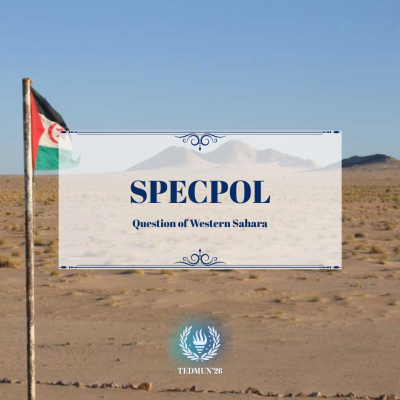
Question of Western Sahara
The Special Political and Decolonization Committee addresses a wide range of issues related to decolonization, including disputes concerning territorial sovereignty, self-determination, and the political status of Non-Self-Governing Territories. One of the most prominent issues under its mandate is the situation in Western Sahara, which remains on the United Nations agenda as an unresolved decolonization matter. SPECPOL examines the legal, political, and humanitarian dimensions of the conflict and works to promote peaceful solutions in accordance with international law and the principles of the United Nations.
The conflict involves the Sahrawi Arab Democratic Republic and the Kingdom of Morocco, and originated from an armed independence movement led by the Polisario Front against Spanish colonial rule between 1973 and 1975, followed by a war with Morocco that lasted until 1991. In recent decades, the conflict has largely shifted away from armed confrontation toward political advocacy and civil efforts, as the SADR and Polisario Front continue to seek full international recognition and independence. SPECPOL will consider measures to support dialogue, uphold the principle of self-determination, and encourage a peaceful and lasting resolution.
President Chair: Civan Erdoğan
Konferansa Gelen Yorumlar
Consolidation of the Genocide and Geneva Conventions with further regards to International Arbitrary Provisions
The Legal Committee serves as the primary body responsible for addressing the development, interpretation, and enforcement of international law within the global community. Central to its mandate are the Genocide Convention and the Geneva Conventions, which establish essential legal standards for preventing mass atrocities and protecting individuals during armed conflict. These frameworks represent the international community’s commitment to upholding justice, human dignity, and accountability during times of crisis.
Despite their significance, challenges such as inconsistent implementation, legal ambiguities, and arbitrary provisions have weakened their effectiveness. The committee will examine measures to strengthen these legal instruments, improve clarity, and promote universal adherence. By reinforcing accountability mechanisms and supporting stronger international cooperation, the Legal Committee aims to enhance the protection of fundamental human rights and uphold the rule of law worldwide.
President Chair: Tuna Unutmaz
Co-Chair: Delfin Soykan
Konferansa Gelen Yorumlar
Prosecution v. Sadao Araki
The International Military Tribunal for the Far East will examine the case of Prosecution v. Sadao Araki, a former general and political leader of the Empire of Japan. Araki was a prominent military figure and influential policymaker accused of contributing to Japan’s militarization and expansionist policies prior to and during the Second World War. The prosecution will present arguments regarding his role in promoting aggressive warfare, shaping military ideology, and supporting actions that violated international law.
The tribunal will evaluate the extent of Araki’s responsibility under international legal principles, including crimes against peace and accountability of military and political leaders. The committee will analyze historical evidence, legal precedents, and questions of individual responsibility within state leadership. Through this proceeding, the tribunal seeks to ensure justice, uphold international law, and reinforce the principle that individuals in positions of authority can be held accountable for actions that threaten global peace and security.
Under Secretary-General: Taha Toprak Artun
Co-Under Secretary-General: Yiğit İbrahim Karakaş
Konferansa Gelen Yorumlar
Synthetic Drugs, Cartels and Urban Drug Violence
The United States Senate plays a central role in shaping national legislation and addressing critical threats to public safety and national stability. The rapid rise of synthetic drugs has intensified the influence of criminal cartels and contributed to increasing levels of violence in urban communities. These substances are often inexpensive to manufacture and distribute, allowing criminal networks to expand their operations, fuel illegal trafficking, and exploit vulnerable populations. The consequences extend beyond public health concerns, as rising overdose rates, organized crime, and firearm-related violence continue to threaten social stability and economic security.
The U.S. Senate will engage in a comprehensive evaluation of legislative and enforcement measures aimed at combating the production, distribution, and trafficking of synthetic drugs, while addressing the broader impact of cartel activity and urban violence. Senators will consider strategies that strengthen border security, enhance interagency cooperation, support local law enforcement, and invest in prevention and rehabilitation efforts, seeking a balanced approach that protects public safety while upholding constitutional principles.
Under Secretary-General: Alin Kayalı
Co-Under Secretary-General: Yağmur Akman
Konferansa Gelen Yorumlar
Investigation of Youth Recruitment by Drug Gangs in New York City
The New York Police Department will address the increasing issue of youth recruitment by organized drug gangs across New York City. Criminal organizations have increasingly targeted minors, exploiting social and economic vulnerabilities to involve them in illegal drug distribution and gang-related activities. This growing trend threatens public safety, undermines community stability, and places young individuals at significant personal and legal risk.
The committee will evaluate the root causes contributing to youth involvement in gang activity and examine current law enforcement strategies aimed at prevention and intervention. It will also consider measures to strengthen cooperation between law enforcement, schools, families, and community organizations. The NYPD seeks to develop effective policies and operational strategies to prevent youth exploitation, dismantle gang recruitment networks, and ensure the safety and well-being of communities throughout New York City.
Under Secretary-General: Ali Efe Kayalı
Konferansa Gelen Yorumlar
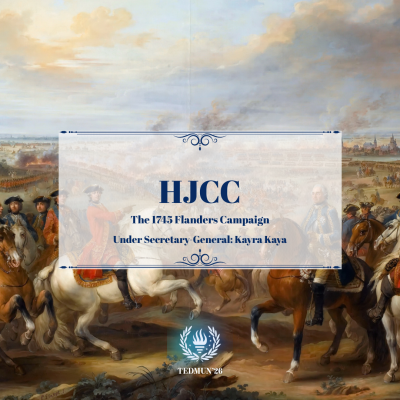
The 1745 Flanders Campaign
The Historical Joint Crisis Committee provides delegates with a dynamic environment to analyze and respond to critical historical conflicts through real-time decision-making and strategic planning. This committee simulates the political and military leadership involved in major historical events, requiring participants to navigate diplomacy, warfare, and internal governance. The 1745 campaign in Flanders represents a decisive moment in the broader struggle for power and influence during the War of the Austrian Succession.
The campaign primarily involved forces of the Kingdom of France under the leadership of Louis XV against the allied armies of Great Britain, the Austrian Empire, and the Dutch Republic. Delegates will confront military, political, and diplomatic challenges as they attempt to secure strategic advantages, maintain alliances , and shape the balance of power in Europe. The committee will encourage critical thinking, crisis management, and leadership in determining the course and outcome of this pivotal campaign.
Under Secretary-General: Kayra Kaya
Academic Assistant: Elif Ata
Academic Assistant: Beren Esen
Konferansa Gelen Yorumlar
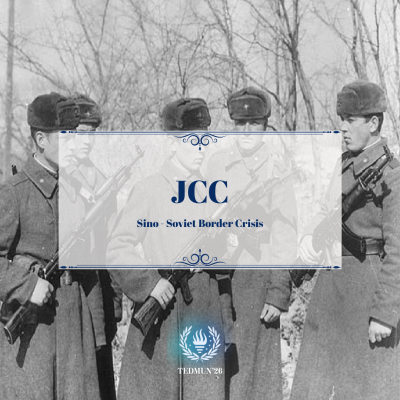
Sino - Soviet Border Crisis
The Joint Crisis Committee will address the escalating tensions between the People’s Republic of China and the Soviet Union over their disputed border. Rooted in ideological rivalry and territorial disagreements, the crisis intensified during the 1960s as relations between the two communist powers deteriorated. Armed clashes, most notably along the Ussuri River, demonstrated the potential for limited conflict to escalate into a larger military confrontation. The situation posed a significant threat to regional stability and global security during the Cold War.
The committee will examine the political, military, and diplomatic actions taken by both states in response to the crisis. Delegates will be required to respond dynamically to evolving developments, including troop mobilizations, negotiations, and strategic decision-making. The Joint Crisis Committee aims to simulate real-time responses, encourage diplomatic solutions, and prevent further escalation while balancing national interests, military preparedness, and international stability.
Under Secretary-General: Vedat Babatan
Co-Under Secretary-General: Emre Mert Özpek